
Most bank charges don't show up as a fee. They show up as a savings rate that drifted down while nobody was looking, a few pounds added to every card payment on holiday, or an overdraft that quietly costs more than a credit card. Nothing here is hidden in the legal sense, because it's all in the tariff. It just relies on you not reading it.
The good news is that nearly all of these costs can be avoided, and most fixes take less than an hour. Here's where the money usually goes and what to do about it.
Fees and rates in this guide were checked in early October 2026. Charges vary by bank and account and can change at any time, so always check your own account's tariff.
Key Takeaways
- For most people the biggest cost isn't a fee at all. It's low interest on savings: £10,000 earning 1% instead of 4% means about £300 a year in interest you never see.
- Most big UK banks charge around 39.9% EAR on arranged overdrafts. That's usually more than a typical credit card.
- Standard high-street debit cards can charge around 2.75%–2.99% on spending abroad, and some add a fixed fee for each purchase. Fee-free cards are easy to get.
- When a card machine abroad offers to charge you in pounds, always choose the local currency.
- Paid packaged accounts and "fee unless you pay in £X" accounts can cost money for years without you noticing.
- Switching current account takes seven working days through the Current Account Switch Service, and the service guarantees it.
At a Glance: The Hidden Costs and How to Dodge Them
| Hidden cost | What it typically looks like | How to avoid it |
|---|---|---|
| Low savings rates | Hundreds of pounds a year in lost interest | Move cash to a competitive account |
| Overdraft interest | Around 39.9% EAR at most big banks | Keep a buffer, or pick an account with an interest-free buffer |
| Foreign transaction fees | Roughly 2.75%–2.99% per purchase on many standard cards | Use a fee-free debit or credit card abroad |
| Overseas cash fees | A percentage fee, often with a minimum | Use a fee-free card, withdraw less often |
| Dynamic currency conversion | A poor exchange rate chosen for you | Always pay in local currency |
| Packaged account fees | A monthly fee for bundled insurance | Keep it only if you'd buy the cover anyway |
| Conditional monthly fees | Charged if you miss a pay-in condition | Check your statements every few months |
1. The Loyalty Penalty on Your Savings
Banks don't usually tell you when your savings rate falls behind the market. Older easy access accounts, and the savings pots linked to big high-street current accounts, often pay well below what newer accounts offer.
For context, the Bank of England's Monetary Policy Committee held Bank Rate at 3.75% at its September 2026 meeting. Three of the nine members voted for a rise to 4%, and the next decision is due on 5 November 2026. If your easy access account pays far below Bank Rate, you're probably being underpaid.
What it costs you: £10,000 at 1% earns £100 a year. At 4%, the same money earns £400. That £300 gap is bigger than most of the other fees in this article combined.
How to avoid it: check your rate at least twice a year and whenever Bank Rate changes. Our guide to the best high-interest savings accounts in the UK shows what to look for: the real rate after any bonus ends, withdrawal limits, and whether your money is protected by the FSCS (up to £120,000 per person, per authorised firm).
2. Overdraft Interest
Overdraft charges used to be a mess of daily and monthly fees. Since April 2020, FCA rules have made banks charge a single annual interest rate. They can no longer charge fixed daily or monthly fees for using an overdraft, and unarranged overdrafts can't cost more than arranged ones.
The catch is that most major banks settled on about 39.9% EAR. HSBC, for example, charges 39.9% EAR on arranged overdrafts above the first £25. Banks can still charge a reasonable fee for refusing a payment, but can't charge a paid-item fee for a payment that takes you into an unarranged overdraft, so it's worth checking your own tariff.
Some banks are changing their terms. HSBC and first direct both say they stopped charging interest on unarranged overdrafts from 19 May 2026. That's a welcome change, but arranged overdraft borrowing at those banks still costs 39.9%.
What it costs you: at 39.9% EAR, staying £500 overdrawn for a month costs roughly £14. That's about £170 a year if the balance stays around £500. Interest is worked out daily, so short dips cost much less, but a permanent overdraft is one of the most expensive ways to borrow.
How to avoid it:
- Set a low-balance alert in your banking app.
- Build a small buffer. Our Emergency Fund Calculator can help you set a target.
- If you're overdrawn every month, a cheaper loan or a 0% card might cost less. Clearing the overdraft over a few months usually beats leaving it in place for good.
If you're struggling with debt, free and impartial help is available from MoneyHelper and from debt charities such as StepChange.
3. Foreign Transaction Fees
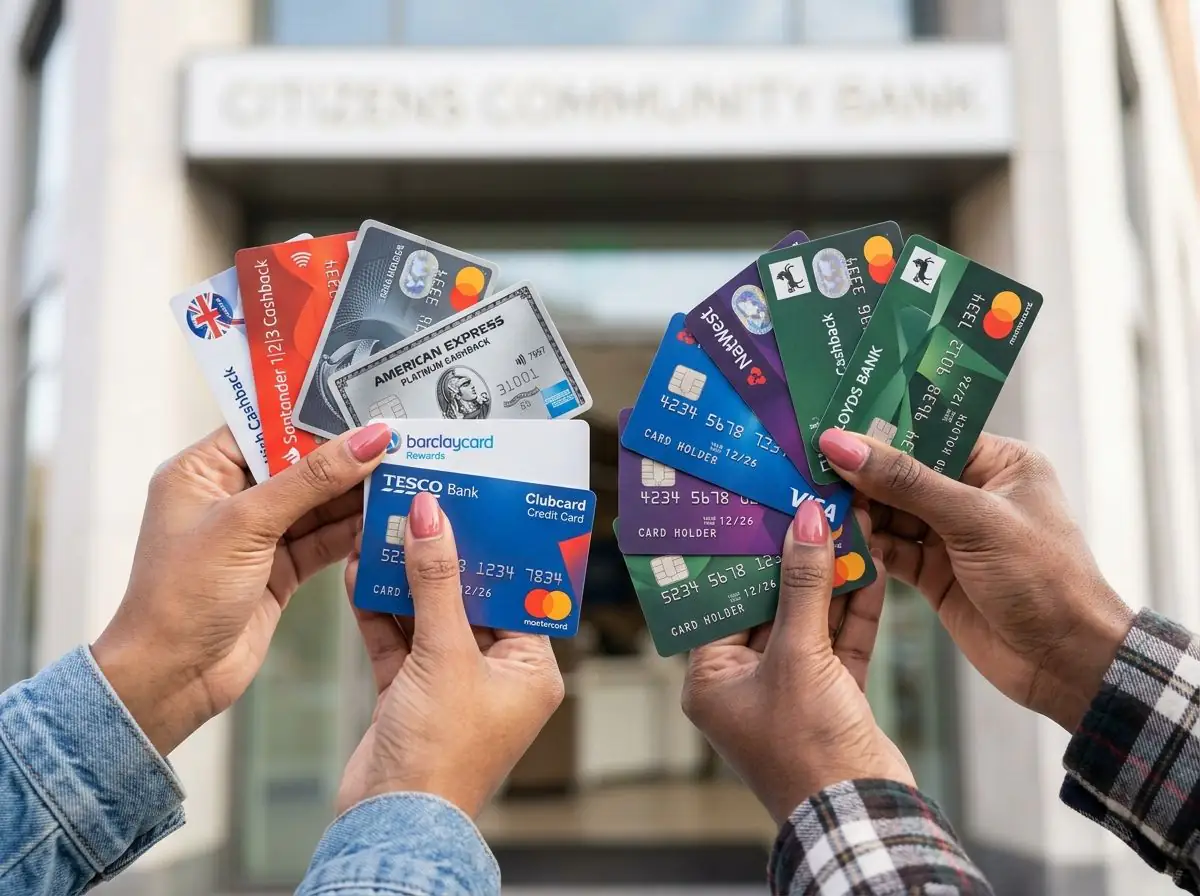
Use a standard debit card from a traditional bank abroad, or online with a non-UK retailer, and you may pay a non-sterling transaction fee. On many high-street cards it's around 2.75%–2.99% of every purchase. Some cards add a fixed fee for each purchase as well, and cash withdrawals often carry a separate percentage fee with a minimum charge.
On a £1,500 holiday, a 2.99% fee adds about £45 before any per-purchase or cash fees.
How to avoid it: many app-based banks, and some accounts at traditional banks, charge no foreign transaction fee on card spending. A fee-free travel credit card is another option, as long as you clear the balance in full. See Monzo vs Starling vs Revolut for how the main app-based options compare. Read the small print, too: some fee-free cards limit free cash withdrawals, or charge more at weekends or above a monthly allowance.
4. Dynamic Currency Conversion
When a card machine or cash machine abroad asks whether you'd like to pay in pounds or in the local currency, that's dynamic currency conversion. If you choose pounds, the machine's operator sets the exchange rate, and it's usually much worse than your card network's rate.
You won't see this as a fee. It's built into the exchange rate, which is why so many people miss it.
How to avoid it: always choose the local currency, even on a fee-free card. If a cash machine says it "guarantees" a conversion rate, decline it.
5. Packaged Account Fees
Packaged accounts bundle insurance, such as travel, mobile phone and breakdown cover, in return for a monthly fee. They aren't automatically bad value. For a family that travels often and drives a lot, the bundle can cost less than buying each policy separately.
The problem is that the fee keeps going out every month whether you use the cover or not, and it adds up to hundreds of pounds a year. If you already have phone insurance through your network, breakdown cover with your car insurance, or a separate annual travel policy, you may be paying twice.
Bundled travel insurance also often has age limits or medical conditions you need to declare. If you don't tell the insurer, your cover may not be valid when you need it.
How to avoid it: list the cover you'd genuinely buy anyway and get separate quotes. If the separate policies come to less than the account fee, ask your bank to move you to a free account. You can usually downgrade without changing your account number.
6. Monthly Fees You Didn't Notice
Some current accounts only waive their monthly fee if you meet conditions, such as paying in a set amount each month or keeping a minimum balance. If your salary changes, or you start paying it into a different account, the fee can start without anyone telling you.
Same-day CHAPS payments are another cost to check. Normal Faster Payments transfers are free, but some banks charge for CHAPS, which is often used to send large amounts such as house deposits. Charges vary a lot from bank to bank, so check your bank's tariff before a big transfer and ask whether Faster Payments would work instead.
How to avoid it: scan three months of statements for anything labelled "account fee", "monthly charge" or "service charge". The Budget Planner helps you spot recurring costs you've stopped noticing.
For US Readers
The pattern is the same in the US, but the fees look different. Instead of a single interest rate, many US banks still charge a flat fee for each overdraft, and maintenance fees often apply unless you keep a minimum balance or set up direct deposit. A Consumer Financial Protection Bureau rule that would have capped overdraft fees at large banks was overturned by Congress in 2025, so don't assume a cap applies to you.
Under long-standing federal rules, banks need your opt-in before charging overdraft fees on ATM withdrawals and one-off debit card purchases. If you opt out, those transactions are simply declined. Many online banks and credit unions offer accounts with no foreign transaction fees and no monthly fees. Deposits are protected by the FDIC (or NCUA for credit unions) up to $250,000 per depositor, per bank, for each ownership category. The CFPB takes complaints if a bank won't resolve a problem.
Switching Is Easier Than You Think
If your bank charges for things other banks don't, you can move. The Current Account Switch Service moves your balance, direct debits and standing orders in seven working days, and the move is guaranteed. Payments sent to your old account are redirected automatically.
Some banks pay cash to switch. These offers can be worth having, but treat them as a bonus. The account's fees, overdraft terms and savings rates matter more over time.
If you think you were mis-sold a packaged account, or your bank won't fix a charge it applied wrongly, complain to the bank first. If you're unhappy with the reply, or you haven't had a final response after eight weeks, you can take the complaint to the Financial Ombudsman Service for free.
What This Means for You
Bank fees are rarely dramatic. They're small, regular and easy to ignore, and that's why they cost so much. For most households, the biggest leaks are a savings rate well below the market, an overdraft used as a permanent cushion, and card fees on holiday. Fixing those three alone can be worth hundreds of pounds a year, with no change to how much you spend.
None of this is personal advice. The right account depends on how you bank, travel and borrow, so compare a few options against your own habits.
What You Should Do Next
- Check the interest rate on every savings account you hold, and compare it with Bank Rate (3.75% as of September 2026)
- Look up your overdraft's EAR and any interest-free buffer
- Set a low-balance alert in your banking app
- Check your debit card's non-sterling fees before your next trip, or get a fee-free card
- If you have a packaged account, price the included cover separately
- Scan three months of statements for monthly or account fees
- If your bank loses on most of these, start a switch through the Current Account Switch Service
Frequently Asked Questions
Do UK banks still charge overdraft fees?
Since April 2020, banks can't charge fixed daily or monthly fees for overdrafts. They charge interest instead, typically around 39.9% EAR at big banks, although they can still charge for unpaid transactions.
Is it cheaper to pay in pounds or local currency abroad?
Local currency, almost always. If you choose pounds, the merchant's provider sets the exchange rate, and that rate is usually worse than your card's.
Can I get money back for a mis-sold packaged account?
Possibly. If you weren't told it was optional, or you couldn't have claimed on the insurance, complain to your bank and then to the Financial Ombudsman Service if you're not satisfied.
Does switching bank accounts hurt my credit score?
Opening a new account may involve a credit check. That can have a small, short-term effect, but for most people it's minor.
How often should I check my savings rate?
At least every six months, and whenever the Bank of England changes Bank Rate. The next decision is due on 5 November 2026.
This article is for informational and educational purposes only and does not constitute financial advice. Fees and rates were checked in October 2026 and may change. Always check your bank's current tariff before acting.