
You can pay every bill on time, never miss a direct debit and still look riskier to a lender than you should. Often the reason is one number on your credit file that most people never check: your credit utilisation.
It's the share of your available credit you're using right now. It doesn't make headlines on your banking app, but it shapes the rates you're offered, the limits you're given and how a mortgage lender reads your file. The good news is that it's one of the few parts of your credit profile you can improve in weeks, not years.
Note: The scores shown by credit reference agencies are guides, not the scores lenders actually use. Each lender applies its own criteria. This article is for education and isn't personal financial advice.
Key Takeaways
- Credit utilisation is your revolving balances divided by your total credit limits. £1,500 owed on £5,000 of limits is 30%.
- Experian's guidance suggests keeping it below 30%, and its dedicated utilisation guide goes further, at below 25%. Lower is generally better.
- Lenders usually see the balance your provider reports each month, so you can clear your card in full and still show high utilisation.
- Closing an unused card can push your utilisation up, because your total limit falls while your balances stay the same.
- Because it's based on current balances rather than history, lower utilisation can show on your file within a month or two.
At a Glance: How Lenders May Read Your Utilisation
There are no official bands, and each lender and agency weighs things differently. This table is a rough guide only.
| Utilisation | What it may suggest | Likely effect |
|---|---|---|
| Low use, cleared regularly | Using credit and repaying it | Generally positive |
| Under 25–30% | Comfortably within limits | Generally positive |
| 30–50% | Leaning on credit more than ideal | Can start to count against you |
| Over 50% | Heavy reliance on borrowing | Usually negative |
| Near or over the limit | Possible financial strain | Strongly negative |
What Is Credit Utilisation?
Credit utilisation compares what you owe on revolving credit with the total limits on those accounts. Revolving credit is borrowing you can use, repay and use again. Experian describes it as credit where you borrow up to a limit and reuse it once you've paid it back, with credit cards and overdrafts as the main examples. In practice that covers:
- Credit cards and store cards
- Arranged overdrafts
- Some catalogue and flexible credit accounts
Personal loans, car finance and mortgages work differently. You borrow a fixed sum and repay it on a schedule, so there's no limit to "use up". They still appear on your file, but they aren't part of this ratio.
Lenders care about utilisation because it's a live snapshot of how stretched you are. Payment history shows how you've behaved in the past. Utilisation shows how much room you have left today.
How to Work Out Your Utilisation
The formula is simple:
Total balances ÷ total credit limits × 100 = your utilisation
Here's an example with two cards:
| Card | Limit | Balance | Card utilisation |
|---|---|---|---|
| Card A | £3,000 | £1,500 | 50% |
| Card B | £2,000 | £300 | 15% |
| Total | £5,000 | £1,800 | 36% |
Your overall utilisation is 36%, just above the 30% guideline. Paying off £300 takes it to 30%. Paying off £800 takes it to 20%.
Lenders may also look at each account on its own. Card A at 50% could still raise questions even if your overall figure looks reasonable. Experian's guide to credit utilisation ratios shows how to work out the figure for a single card as well as your total.
Want to see what cutting your balances could do? Try our Credit Score Simulator and compare it with other changes, such as a missed payment or a new application.
Why It's Quietly Costing You
High utilisation rarely causes one dramatic drop. It costs you in the background:
- Worse rates. Lenders use your file to decide what to offer. Someone using 80% of their limits may be offered a higher APR or a lower limit than someone using 20%.
- More declines. Some lenders read high or rising balances as a sign you're relying on credit to get by.
- Smaller mortgage offers. Mortgage lenders look at card balances on your file and in their affordability checks. Bigger balances can reduce how much they'll lend.
- Interest you don't need to pay. If you carry a balance, you're paying for it. At 25% APR, a £3,000 balance costs roughly £62 for a 30-day billing period in interest, before any payments or fees.
The persistent debt trap
If you only make minimum payments for a long time, FCA rules kick in. Persistent debt means that over 18 months you've paid more in interest, fees and charges than you've repaid of what you actually borrowed. At that point your card provider must contact you and explain the benefits of paying more.
If it's still happening at 36 months, the provider must offer you a way to repay the balance within a reasonable period. UK Finance says the FCA usually sees that as three to four years. If you can't afford that, the provider must show forbearance, which can include reducing or waiving interest and charges. The card can also be suspended. The FCA's announcement of the credit card rules sets out the basics. People in persistent debt for 12 months also won't be offered limit increases.
Your provider can't force you to pay more than the agreed minimum if you're keeping to your agreement. If a letter like this arrives and you're struggling, free, confidential help is available through MoneyHelper, StepChange or Citizens Advice.
The Statement-Date Catch
Card providers generally update the credit reference agencies once a month, and the balance they send is often close to your statement balance. Exact timing varies by provider, so it's worth asking yours.
This trips up people who spend heavily and clear the card in full every month. Put £2,400 on a £3,000 card, pay it off after the statement, and your file may still show 80% utilisation, even though you never paid a penny of interest.
The fix: if you're applying for credit soon, make a payment before your statement date so a lower balance gets reported.
How to Lower Your Credit Utilisation
- Pay down balances. This is the most direct fix. Start with the card that has the highest utilisation or the highest interest rate. Our Debt Payoff Planner can help you plan the order.
- Pay before your statement date. A mid-month payment lowers the balance that gets reported.
- Spread spending carefully. Experian notes that spreading spending across your available credit can help keep the percentage down. Just don't use it as a reason to spend more.
- Think twice before closing old cards. A fee-free card you don't use still adds to your total limit. Closing it can push your utilisation up straight away.
- Treat limit increases with care. A higher limit lowers your ratio, but only if your spending stays the same. Ask the provider whether a request involves a hard search.
- Watch your overdraft. Living in an arranged overdraft counts as using revolving credit too.
For the wider picture of what moves your score, read What Affects Your Credit Score?
How Quickly Can Utilisation Change Your Score?
This is where utilisation differs from most factors. Missed payments and defaults generally stay on your UK credit file for six years. Utilisation has no long memory. Once your providers report a lower balance, your score can reflect it after the next update or two.
That makes it the quickest lever before a big application. If you're planning a mortgage or car finance, start paying balances down two to three months beforehand so the lower figures are on your file when the lender checks.
Check all three main UK agencies (Experian, Equifax and TransUnion), as each may hold slightly different information. Checking your own report never affects your score.
Is 0% Utilisation Best?
Not necessarily. Having cards open with no balance isn't a problem, but Experian points out that spending on a card and clearing it in full each month can help build your credit history. A small regular spend, cleared in full by direct debit, gives lenders evidence that you manage credit well, and it costs nothing in interest.
What you want to avoid is the opposite: balances that sit near the limit, or creep up month after month.
For US Readers
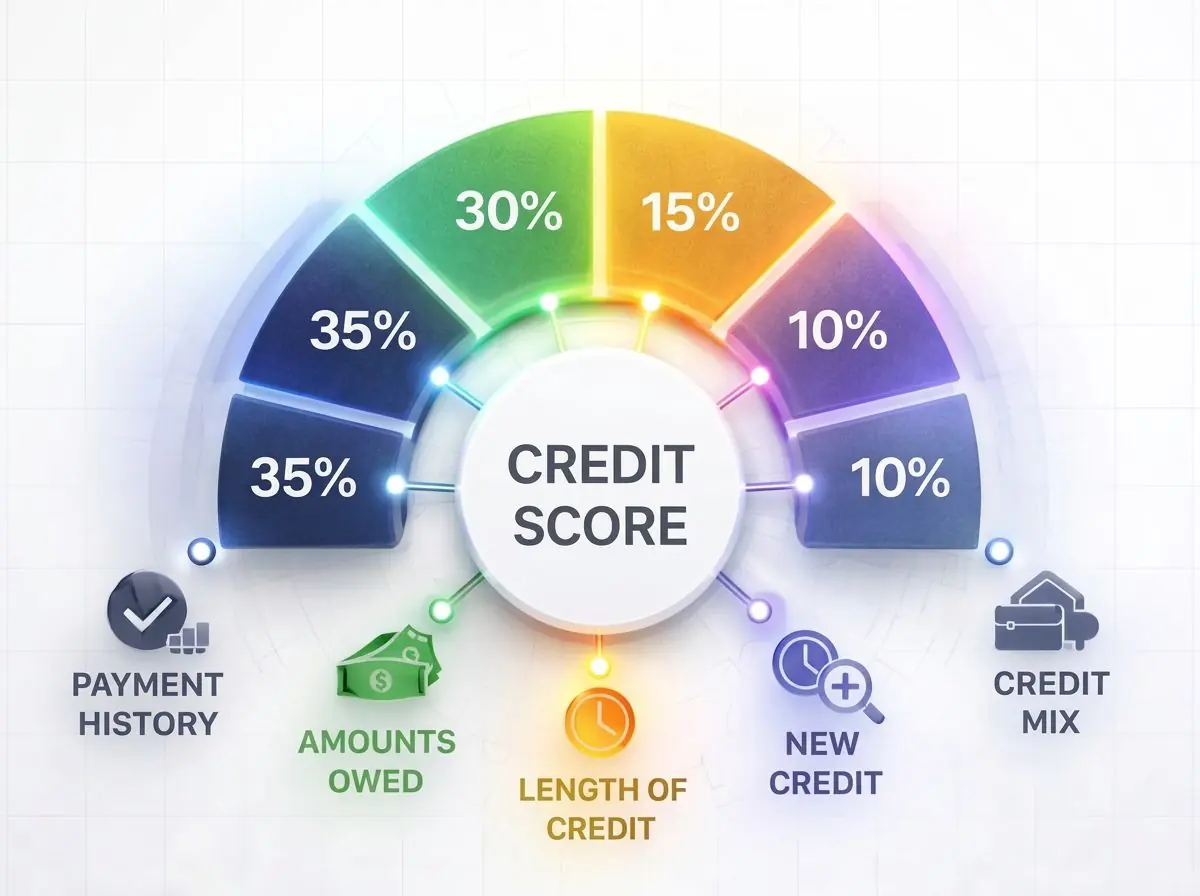
The idea is the same in the US. FICO calls this factor "amounts owed" and says it makes up 30% of a FICO score. VantageScore gives utilisation a weighting of about 20%. The CFPB says experts advise using no more than 30% of your total credit limit, and that you don't need to carry a balance to get a good score. Paying in full each month helps you get the best scores and keeps interest costs as low as possible. The CFPB also warns that closing cards and moving balances onto one card can hurt your score if it pushes your utilisation up.
What This Means for You
Utilisation is the part of your credit file that responds fastest to what you do. You don't need a perfect history to improve it, just lower reported balances. Aim for under 30% overall and on each card (under 25% if you want extra headroom), time your payments around your statement date before an application, and think about your total limit before closing any card. If balances have been building for a while, getting them down will usually do more for you than any score trick. For a step-by-step plan, read How to Improve Your Credit Score Fast.
What You Should Do Next
- List every credit card, store card and overdraft with its balance and limit
- Work out your overall utilisation and the figure for each card
- Find each card's statement date and set a reminder to pay a few days before it
- Set up a direct debit for at least the minimum on every card
- Choose which balance to clear first and plan monthly overpayments
- Check your credit reports with all three UK agencies before any big application
- If you've had a persistent debt letter, contact free debt advice before agreeing to new repayments
Frequently Asked Questions
What is a good credit utilisation ratio in the UK?
Experian's general guidance is below 30%, and its dedicated utilisation guide suggests below 25%. Regularly using more than half your limits is likely to count against you.
Does paying my card in full every month mean my utilisation is 0%?
Not necessarily. Your provider usually reports a balance close to your statement balance, which may be before your payment clears. Paying earlier in the month lowers the figure lenders see.
Do overdrafts count towards credit utilisation?
Yes. An arranged overdraft is revolving credit, so regularly using most of it can have a similar effect to a high card balance.
Will closing a credit card improve my score?
Not straight away, and it can do the opposite. Closing a card removes its limit, which can raise your utilisation. It can still be the right call if the card charges a fee or tempts you to overspend.
How long does it take for lower utilisation to show on my credit report?
Usually one to two months, depending on when your providers send updates to the credit reference agencies.
This article is for information and education only and doesn't constitute financial advice. It draws on publicly available guidance from Experian, the FCA, UK Finance and the CFPB, checked in October 2026.