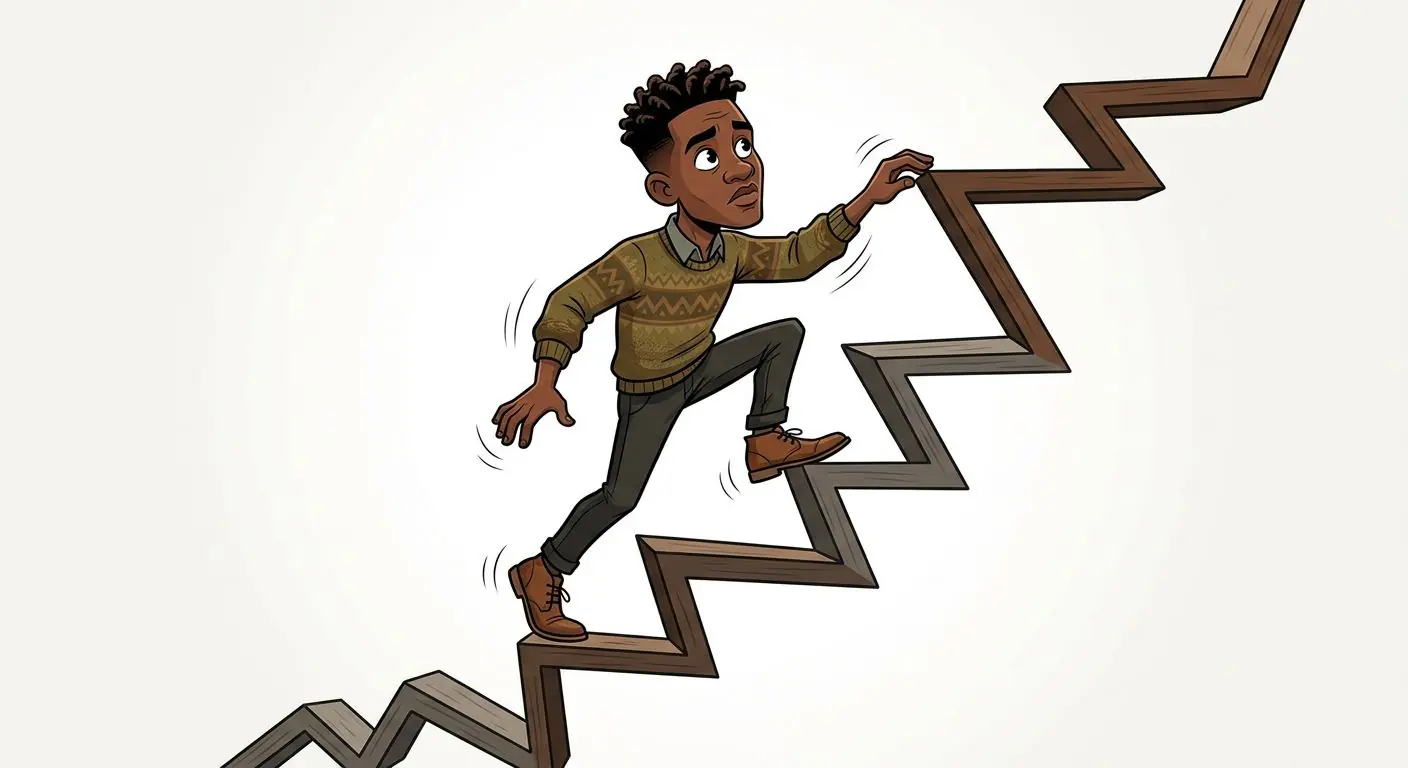
Retiring at 55 in the UK: Is It Actually Possible?
Retiring at 55 is possible, but the minimum pension age rises to 57 in 2028 and there's a 12-year gap before the State Pension starts. Here's what it really costs, how to fund the bridge years, and the tax traps to avoid.
Disclaimer: This article is for informational and educational purposes only and does not constitute financial or tax advice. Figures and examples are illustrative — your own early-retirement number depends on your spending, pension type, health, and household circumstances.
Key Takeaways
Retiring at 55 in the UK is possible, but the window is closing: the earliest age you can normally access a private pension rises from 55 to 57 on 6 April 2028
The hardest part isn't reaching 55 — it's the "bridge" of around 12 years before the State Pension starts at 67, when your own savings have to cover 100% of your spending
Using the PLSA's Moderate standard of ~£31,700 a year, a single person retiring at 55 needs very roughly £700,000–£860,000 in today's money — around 1.5–2x what they'd need retiring at State Pension age
ISAs are the natural bridge fund, because they can be accessed at any age, tax-free, with no minimum age rule
Flexibly drawing taxable pension income triggers the £10,000 Money Purchase Annual Allowance, which caps what you can pay back into pensions later — a trap for anyone planning a part-time return to work
Early retirement is rarely all-or-nothing: partial retirement, phased drawdown, and part-time income make 55 far more achievable than a hard stop
At a Glance — Retiring at 55 vs State Pension Age
Retiring at 55
Retiring at 67
Private pension access
From 55 (57 if you turn 55 after 5 April 2028)
Available
State Pension
Not until 67 — ~12-year gap
Starts immediately (up to £12,547.60/yr)
Years your savings must last
30–40 years
20–25 years
7 min read·September 24, 2026·3
Serena Voss
Retirement & Personal Finance Strategist
Years of contributions lost
~12 years of pay, pension, and employer match
None
Illustrative pot needed (Moderate, single)
~£700,000–£860,000
~£480,000
Main risk
Running out of money in your 80s
Working longer than you'd like
Illustrative figures based on the PLSA Moderate standard (~£31,700 a year for one person), a full new State Pension, and a 4% withdrawal rule of thumb. Not a personal recommendation.
The Age Rule You Need to Check First
In the UK, the earliest age you can usually take money from a personal or workplace pension — known as the normal minimum pension age — is currently 55. Under legislation confirmed by the government, it rises to 57 from 6 April 2028, keeping it roughly ten years below State Pension age. You can read the details in the government's policy paper on increasing the normal minimum pension age.
In practice, this means:
If you turn 55 after 5 April 2028 (broadly, anyone born after 5 April 1973), your earliest access age is 57, not 55
Some people have a "protected pension age" — if your scheme rules gave you an unqualified right to take benefits at 55 before November 2021, you may keep that right. Ask your provider in writing
Defined benefit (final salary) schemes often allow early retirement at 55, but usually with an actuarial reduction of around 4–6% for each year you retire before the scheme's normal retirement age
So for many people now in their early 50s, "retiring at 55" really means "retiring at 55 on ISAs and cash, then accessing the pension at 57." That's still possible — it just changes how you build the bridge.
The Real Challenge: The 12-Year Bridge
The State Pension is the foundation most UK retirement plans rest on, currently paying up to £12,547.60 a year in 2026/27 for someone with a full National Insurance record. But State Pension age is rising from 66 to 67 between 2026 and 2028, which means anyone retiring at 55 faces roughly twelve years with no State Pension at all.
During those bridge years, your private savings have to fund your entire lifestyle — not just the top-up above the State Pension. That's why early retirement costs disproportionately more than retiring a few years sooner would suggest.
Early retirement also has a quieter cost: National Insurance gaps. You need 35 qualifying years for the full new State Pension. If you stop working at 55 with fewer than that, you may need to buy voluntary Class 3 contributions to fill the gaps. Checking your State Pension forecast on gov.uk takes about five minutes and tells you exactly where you stand.
The most credible UK benchmark for retirement spending is the Pensions and Lifetime Savings Association's Retirement Living Standards. For a single person, the Moderate standard is around £31,700 a year, and the Comfortable standard around £43,900 a year.
Here's a simplified worked example for a single person targeting the Moderate standard from 55:
Phase
Annual Income Needed From Savings
Rough Capital Required
Bridge: 55 to 67
£31,700 (no State Pension)
~£380,000 (12 × £31,700)
Later life: 67 onwards
~£19,150 (£31,700 minus State Pension)
~£480,000 at 67, using a 4% withdrawal rule
Total in today's money
~£700,000–£860,000, depending on investment growth over the bridge years
Compare that with someone retiring at 67, who needs only the later-life portion — roughly £480,000. Retiring twelve years early doesn't just add twelve years of spending; it also removes twelve years of contributions, employer matching, and compound growth.
Couples have it easier per person: two State Pensions arrive at 67, and shared costs (housing, energy, a car) mean a household doesn't need double a single person's income.
1. ISAs. A Stocks & Shares ISA is the ideal bridge fund: no minimum access age, no tax on withdrawals, and a £20,000 annual allowance. Many early retirees deliberately build an ISA pot sized to cover the years before pension access, then switch to pension income later.
2. Phased pension drawdown. Rather than taking your 25% tax-free cash in one go, you can crystallise your pension in chunks, so each withdrawal is 25% tax-free and 75% taxable. Keeping taxable income within your £12,570 Personal Allowance in the pre-State Pension years can make early withdrawals largely tax-free.
3. Defined benefit pensions. If you have a final salary pension from an earlier job, taking it early — even with a reduction — can provide a guaranteed income floor for the bridge years. Weigh the permanent reduction carefully against how long you expect to live.
4. Part-time or freelance income. Even £10,000 a year of earned income dramatically reduces the pressure on your pot in your late 50s and early 60s, and can keep your National Insurance record topped up.
5. Cash buffer. Holding one to two years of spending in cash helps you avoid selling investments during a market crash — the biggest threat to an early retiree's plan in the first decade.
The Money Purchase Annual Allowance (MPAA). Once you take taxable income from a defined contribution pension flexibly, the amount you can pay into pensions with tax relief drops from £60,000 to £10,000 a year. Taking only your tax-free cash doesn't trigger it. HMRC explains the rules on its pension annual allowance page.
Emergency tax on the first withdrawal. Your first flexible withdrawal is often taxed on an emergency "month 1" basis, so you can pay far too much. You can reclaim the overpayment from HMRC, but it's worth planning cash flow around.
The tax-free cash cap. Your total tax-free lump sums are capped at the £268,275 Lump Sum Allowance for most people, regardless of pot size.
Pension scams targeting 55-year-olds. Unsolicited offers of "early access," overseas investments, or "loopholes" are red flags. Check any firm on the FCA's ScamSmart service before moving money.
Common Mistakes
Planning around 55 without checking your birth date against the 2028 rise to 57
Underestimating the bridge cost by budgeting as though the State Pension starts immediately
Taking all 25% tax-free cash at once and leaving it in a low-interest current account
Being too cautious with investments. A pot that needs to last 35+ years still needs meaningful growth to keep pace with inflation
Ignoring healthcare and home costs. Early retirees lose workplace perks like private medical cover and death-in-service benefits
What You Should Do Right Now
Confirm your earliest pension access age. Check your birth date against the April 2028 rule, and ask each provider whether you have a protected pension age.
Check your State Pension forecast and count how many qualifying years you'll have by 55.
Estimate your spending, then split your target into two parts: the bridge (55 to 67) and later life (67 onwards).
Run your numbers. Our Retirement Calculator shows how your pot grows and how long it lasts at different retirement ages and contribution levels.
Book a free Pension Wise appointment once you're 50 or over — MoneyHelper's Pension Wise service provides impartial guidance on your drawdown options at no cost.
Retiring at 55 in the UK is achievable, but it's a different project from retiring at State Pension age. You need a bigger pot, a plan for the 12-year bridge before the State Pension arrives, and a clear view of whether your pension can be accessed at 55 or 57.
For most people, the realistic path is a combination: an ISA-funded bridge, careful phased drawdown, and ideally some part-time income in the early years. Start by checking your access age and State Pension forecast. Those two facts shape everything else.
Frequently Asked Questions
Can I still access my pension at 55 after 2028?
For most people, no. From 6 April 2028 the minimum age becomes 57 unless you have a protected pension age under your scheme's rules. If you'll be 55 or 56 around that date, ask your provider in writing how the change affects you.
How much do I need to retire at 55 in the UK?
It depends on your spending, but as an illustration, a single person targeting the PLSA Moderate standard (~£31,700 a year) needs roughly £700,000–£860,000 in today's money, because savings must cover everything until the State Pension starts at 67.
Can I retire at 55 and still get the full State Pension?
Yes, if you have 35 qualifying National Insurance years by the time you reach State Pension age. You can fill gaps by buying voluntary contributions, or you may receive National Insurance credits in some circumstances.
Is it better to use my ISA or pension first if I retire early?
Many early retirees use ISAs first to bridge the gap, letting the pension keep growing, then draw pension income within their Personal Allowance to limit tax. The right order depends on your pot sizes and tax position.
Will taking my tax-free lump sum at 55 stop me paying into a pension?
No. Taking only your tax-free cash doesn't trigger the £10,000 Money Purchase Annual Allowance. Taking taxable income flexibly from a defined contribution pension does.
This article is for informational and educational purposes only and does not constitute financial or tax advice. Figures are illustrative and based on publicly available data from GOV.UK, HMRC, the FCA, the PLSA, and MoneyHelper as of 2026. Please seek regulated financial advice for guidance tailored to your personal circumstances.
Still with us?
Take the community poll, test yourself with the quiz — or both.
Topic hubs
Browse more articles in these categories and tags.
Serena Voss is an Investing, Wealth, and Personal Finance strategist with a passion for making complex financial concepts accessible to everyday people. She specialises in goal-based financial planning, behavioural economics, and helping readers translate financial knowledge into confident, consistent action.
125K followers89 articles
Related reading
Related articles
Closely related by shared tags and categories — continue in this topic cluster.