Credit Score Simulator: What Actually Moves the Needle?
Some credit tips add real points; most are noise. See which moves matter most, from the electoral roll to card balances, which myths do nothing, and test your own plan in our free simulator.
Note: Credit scores shown by credit reference agencies are guides, not the scores lenders actually use. Each lender runs its own checks. This article is for educational purposes and isn't financial advice.
Key Takeaways
Not every credit "tip" is worth your time. A few actions move your score a lot, some move it a little, and many popular myths move it not at all
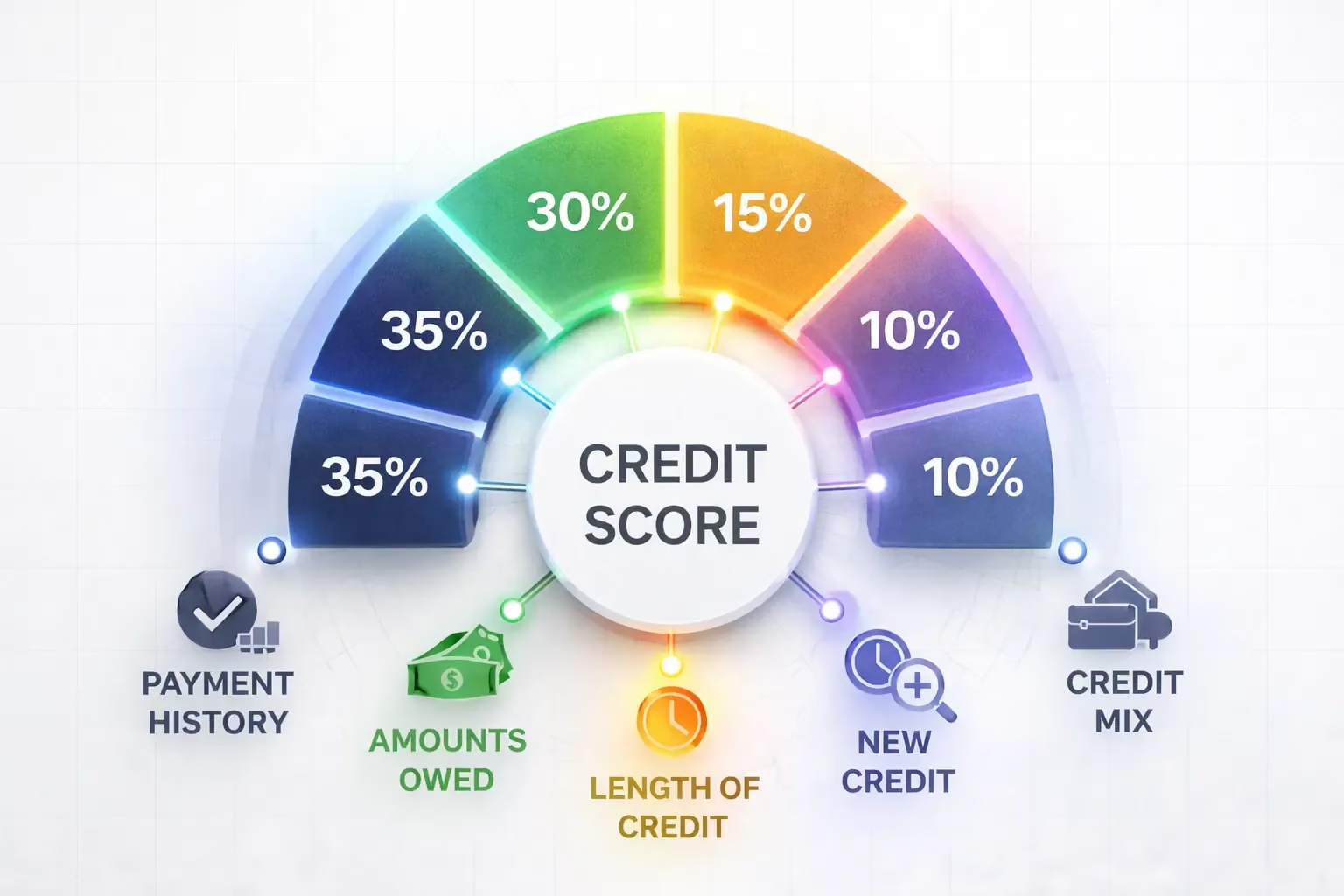
The biggest wins for most people are getting on the electoral roll, cutting credit card balances to under about 25–30% of your limits, and never missing a payment
The biggest losses come from missed payments, defaults and CCJs, which stay on your file for six years
Checking your own score, your salary and your savings have no effect. Neither do soft-search eligibility checkers
Most changes take 4–6 weeks to show, because lenders usually report to credit reference agencies once a month
At a Glance — What Moves Your Score (and by How Much)
Action
Direction
Typical impact
How fast it shows
Missing a payment by 30+ days
⬇️
High
Next monthly update, stays 6 years
Default, CCJ, IVA or bankruptcy
⬇️
Very high
Stays 6 years
Cutting card usage from 70% to under 30%
⬆️
High
1–2 months
Registering on the electoral roll
⬆️
Medium–high
Within about 30 days
Fixing an error on your report
⬆️
7 min read·September 27, 2026·0
Maya Thornton
Writer
Varies, can be high
Weeks, once corrected
Several hard searches in a short period
⬇️
Medium
Immediately, fades over 12 months
Opening a new account
⬇️ then ⬆️
Low–medium
Dips short-term, helps long-term
Closing your oldest card
⬇️
Low–medium
Next update
Using Experian Boost or rent reporting
⬆️
Low
Weeks (only on some agencies)
Checking your own score
—
None
—
Impact levels are indicative. Credit reference agencies don't publish exact point values, and the effect depends on the rest of your file.
First, Know Which Score You're Looking At
The UK has three main credit reference agencies, and each uses a different scale:
Agency
Scale
"Good" starts around
"Excellent"
Experian
0–999
881
961+
Equifax
0–1,000
531
811+
TransUnion
0–710
604
628+
Equifax moved from a 700-point to a 1,000-point scale in 2021, as Which? explained at the time. Don't compare numbers across agencies. A 650 is excellent on TransUnion but poor on Experian.
A single payment that's 30 or more days late can undo years of good behaviour. Missed payments, defaults and County Court Judgments stay on your report for six years, even after you've cleared the debt.
What to do: Set up a direct debit for at least the minimum payment on every card and loan. It's the single most protective move you can make.
2. Credit utilisation, the fastest lever to pull
Utilisation is how much of your available credit you're using. Lenders see high utilisation as a sign of financial stress.
Example: You have two cards with a combined limit of £4,000 and owe £2,800. That's 70% utilisation. Paying it down to £1,000 takes you to 25%, and that's often visible at the next monthly update.
Pro tip: Card providers usually report the balance on your statement date, not your payment date. Paying down before the statement is issued can show a lower balance, even if you clear the card in full every month.
3. The electoral roll, the easiest quick win
Lenders use the electoral register to confirm who you are and where you live. According to Experian, registering can add up to 50 points to your Experian score, and it usually appears within about 30 days. It takes five minutes to register to vote on GOV.UK.
If you've moved recently, re-register at your new address. This is one of the most common reasons for an unexpectedly low score.
4. Errors, the hidden drag
Old addresses, accounts you don't recognise, or a "financial association" with an ex-partner you shared a joint account with can all pull your score down. Check your report with all three agencies. You can dispute errors for free, and ask for a notice of disassociation if you no longer have financial ties to someone.
Test these moves before you make them: Our Credit Score Simulator lets you change your utilisation, payment history, account age and searches, and see how each one shifts an illustrative score. It's the quickest way to see where your effort will pay off.
The Medium and Small Movers
Hard searches. Each full credit application leaves a hard search on your file. One or two won't do much, but several in a few weeks can look like you're desperate for credit. Searches typically stay visible for 12 months, and some agencies show them for up to two years. Use eligibility checkers first. They use a soft search, which lenders can't see.
New accounts. Opening a card lowers the average age of your accounts and adds a hard search, so expect a small dip. Over time, the extra available credit and a record of on-time payments usually more than make up for it.
Closing old cards. Closing your oldest card shortens your credit history and cuts your total available credit, which pushes utilisation up. If the card is free, keep it open and use it occasionally.
Experian Boost and rent reporting. Experian Boost lets you share, through Open Banking, that you pay things like council tax and subscriptions on time. Rent reporting schemes do the same with rent payments. Both can help, especially if you have a thin file, but they usually affect only one or two agencies.
Buy now, pay later. Some BNPL providers now report to credit reference agencies. Missed BNPL payments can hurt your score just like a missed card payment.
What Doesn't Move the Needle at All
Myth
Reality
"Checking my score lowers it"
Checking your own file is a soft search. No effect.
"A higher salary raises my score"
Income isn't on your credit file. No effect on the score, although lenders consider it separately.
"Having savings helps"
Savings aren't recorded. No effect.
"Never borrowing gives the best score"
With no credit history, there's nothing to score.
"My partner's bad credit affects me"
Only if you're financially linked, for example through a joint account or joint loan.
How to Use the Simulator to Build a Plan
Enter your current position. Include your card limits and balances, any missed payments, the age of your oldest account and any recent applications.
Run a utilisation what-if first. See how your score changes if you pay balances down to 50%, 30% and 10%. For most people, this is the biggest controllable gain.
Test a new application. Add a hard search and a new account to see the short-term dip before you apply for a mortgage or a car loan.
Check the damage of a missed payment. Seeing the size of that drop is a strong reason to set up direct debits today.
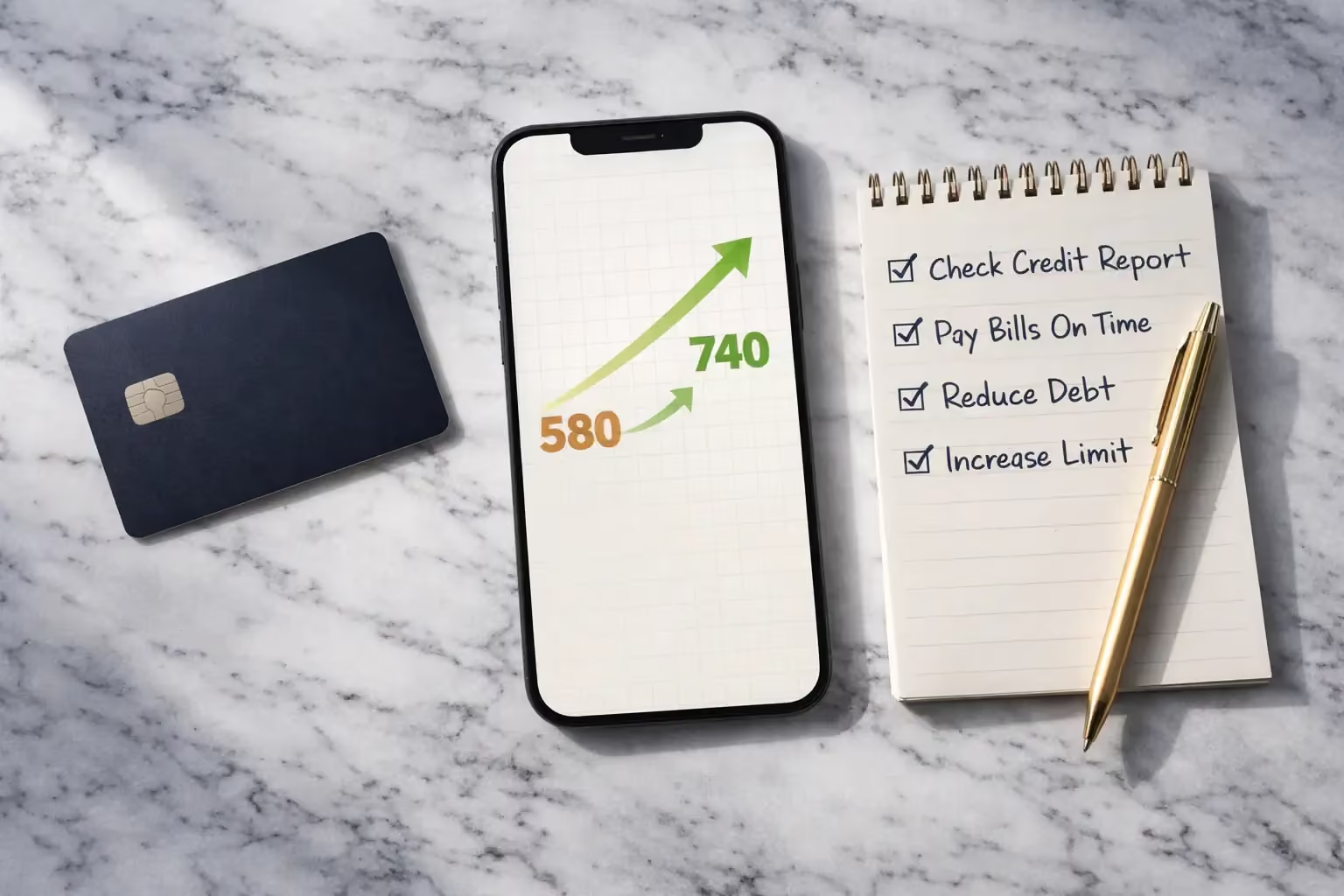
Turn it into a timeline. Write down which changes you'll make this month and check your real report in 6–8 weeks.
The FCA found that credit files often differ between agencies, because many lenders report to only one or two of them. In February 2026, it proposed rules that would require lenders who share credit data with one designated agency to share it with all of them. If the rules go ahead, your scores across Experian, Equifax and TransUnion should become more consistent. That makes it even more important that your underlying behaviour is solid.
What You Should Do Right Now
Check you're on the electoral roll at your current address.
Get your free reports from Experian, Equifax and TransUnion, either directly or through free services like MSE Credit Club (Experian) and ClearScore (Equifax).
Dispute any errors and remove old financial associations.
Set up direct debits for at least the minimum payment on everything.
Pay card balances below 30% of your limits, before the statement date.
Use eligibility checkers before any new application.
The Bottom Line
Your credit score responds to a handful of behaviours: paying on time, keeping card balances low, being verifiable at your address, and not applying for too much credit at once. Almost everything else is noise. Focus on the big movers, test your plan in the simulator, and give it two or three monthly updates to show.
Frequently Asked Questions
What's the fastest way to raise my credit score?
For most people, it's paying credit card balances down to below about 30% of their limits and registering on the electoral roll. Both can show within one to two monthly updates.
How many points does registering to vote add?
Experian says it can add up to 50 points to your Experian score. The real effect depends on the rest of your file, and people with thin files tend to see the biggest change.
How long do missed payments stay on my credit file?
Six years from the date they're recorded, even if you've since paid the debt in full.
Does checking my credit score hurt it?
No. Checking your own report or score is a soft search that lenders can't see.
Is the score in a credit score simulator my real score?
No. Simulators, including ours, use an educational model to show how different factors interact. Your real scores come from the credit reference agencies, and each lender makes its own decision.
This article is for informational and educational purposes only and does not constitute financial advice. Score ranges and guidance are based on publicly available information from Experian, Equifax, TransUnion, Which?, GOV.UK and the FCA as of September 2026, and can change.
Still with us?
Take the community poll, test yourself with the quiz — or both.
Topic hubs
Browse more articles in these categories and tags.
Maya Thornton is a personal finance writer specializing in credit, debt strategy, and consumer banking. With a background in financial counseling, she translates complex credit system mechanics into plain-language guides that help everyday people take real control of their financial lives.
125K followers89 articles
Related reading
Related articles
Closely related by shared tags and categories — continue in this topic cluster.