Why Did My Credit Score Drop? 9 Common Causes Explained
A sudden credit score drop usually has a simple cause, and many fix themselves within weeks. Diagnose yours in minutes, from card balances and house moves to missed payments, errors and identity fraud.
Note: The scores shown by credit reference agencies are guides, not the scores lenders actually use. Each lender runs its own checks. This article is for educational purposes and isn't financial advice.
Key Takeaways
Small monthly movements are normal. Your score is recalculated every time a lender updates your file, so a dip of a few points often means nothing
A sudden large drop usually has one of three causes: a missed payment, a big jump in card balances, or something you didn't do, such as an error or fraud
Some drops come from good behaviour, like paying off a loan or opening a new card. These usually recover within months
Check all your credit reports when your score falls. The cause is almost always visible on the report itself, and errors can be disputed for free
Identity fraud is a growing cause. Fraud prevention service Cifas recorded more than 242,000 identity fraud cases in 2025
At a Glance — Diagnose Your Drop
What you see
Most likely cause
Serious?
Small dip (a few points) with nothing new on the report
Routine recalculation or slightly higher balances
Usually not
Drop after you applied for credit
Hard search and/or new account
Temporary
Drop after a big purchase on a card
Higher utilisation
Temporary, reverses once you pay down
Drop after you paid off a loan or closed a card
Less available credit or shorter history
Usually small and temporary
Drop after moving house
Not on the electoral roll at the new address
Easy to fix
Large sudden drop
Missed payment, default, or fraud
7 min read·September 27, 2026·1
Maya Thornton
Writer
Yes, act now
Drop you can't explain
Error, financial association or fraud
Check your reports now
Start Here: Check the Report, Not Just the Score
A score is a summary. The report shows what actually changed. In the UK, you have the right to see your statutory credit report for free from each agency: Experian, Equifax, TransUnion and the smaller Crediva. MoneyHelper explains how to request each one. Checking is a soft search, so it never affects your score.
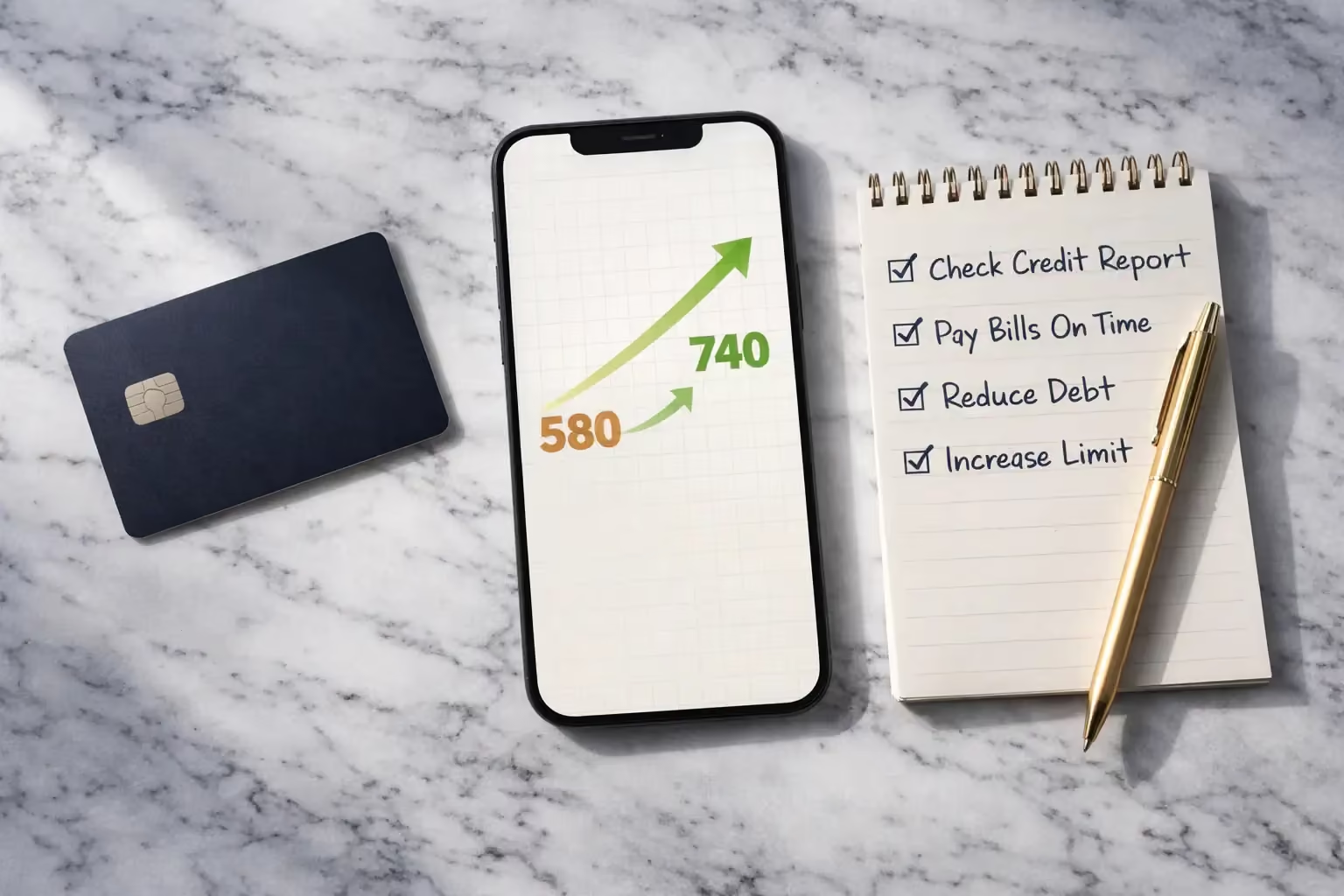
Look for new accounts, late payment markers, changed limits, new searches, and any addresses or names you don't recognise. Then match what you find to the causes below.
1. A Late or Missed Payment
This is the most damaging cause, and the one most likely to explain a sharp fall. Lenders typically report a payment as missed once it's 30 days late, and the marker stays on your file for six years. Even one can knock a strong score down a band.
What to do: Pay the arrears immediately, and set up a direct debit for at least the minimum payment. If there was a genuine reason, such as illness or a bank error, contact the lender. If the lender made the mistake, they can remove the marker. You can also add a Notice of Correction to explain what happened. It won't change your score, but lenders reading your file will see it.
2. Your Card Balances Went Up
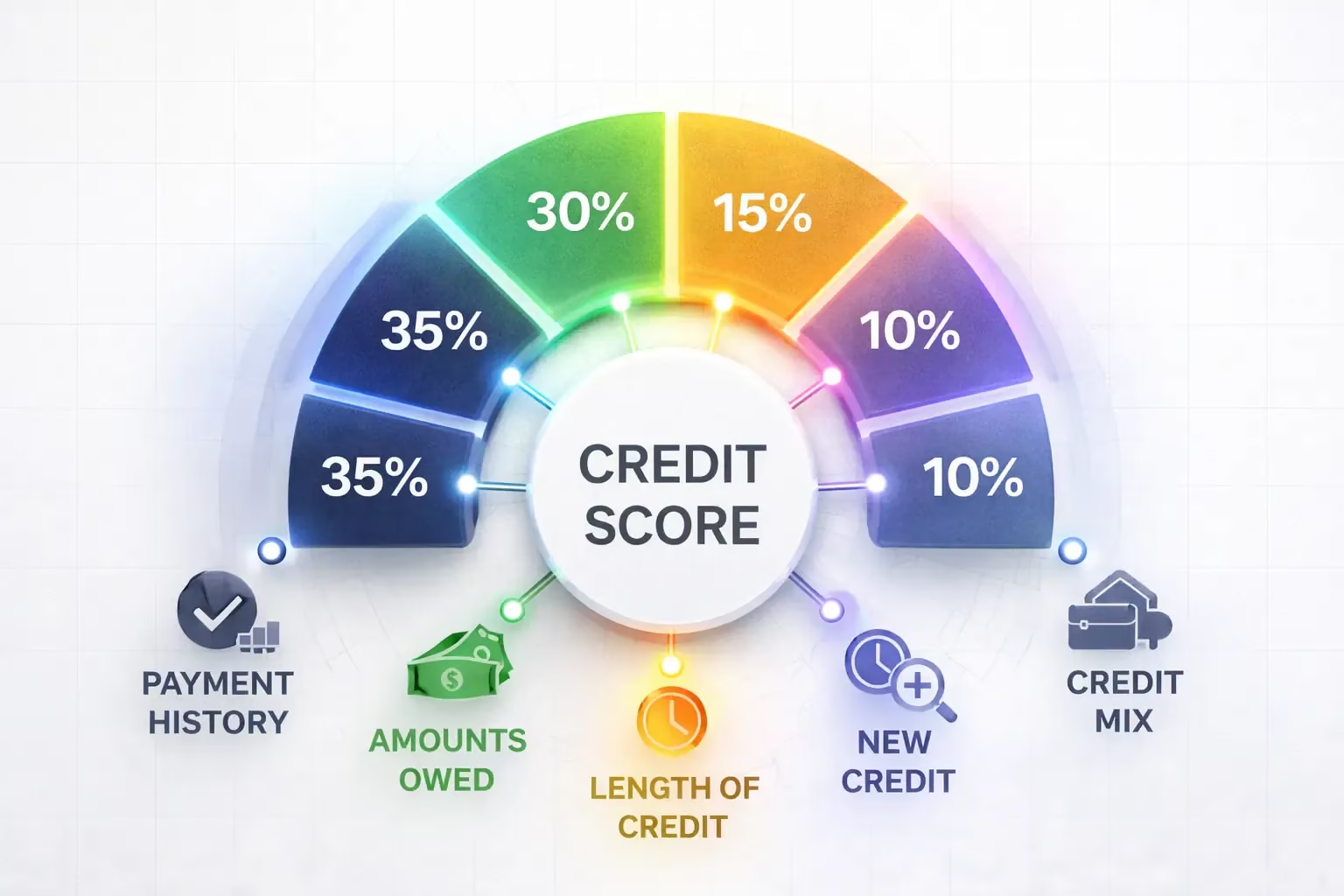
Your score looks at credit utilisation, meaning how much of your available credit you're using. Spend £1,500 on a card with a £2,000 limit and you're at 75%, even if you plan to clear it in full.
This catches out people who pay in full every month. Providers usually report your balance on the statement date, so a big purchase can show up as high utilisation before you've had a chance to pay it off.
What to do: Pay down balances before the statement date, or spread spending across cards. Your score should recover at the next monthly update.
3. A Lender Cut Your Credit Limit
You didn't spend a penny more, but your score still fell. If a lender reduces your limit, perhaps because the card was inactive, your utilisation rises automatically. £500 owed on a £5,000 limit is 10%. Cut the limit to £1,000 and it's 50%.
What to do: Check your report for a changed limit. Use dormant cards occasionally for a small purchase that you clear in full, so lenders don't cut or close them.
4. You Applied for Credit
Every full application for a loan, card, mortgage or phone contract adds a hard search to your file. One search has a small effect, but several in a short space of time can suggest financial difficulty. Hard searches typically stay visible for 12 months, and some agencies show them for up to two years.
What to do: Use eligibility checkers before applying. They use soft searches, which don't affect your score. Space out applications, especially in the six months before a mortgage.
5. You Opened a New Account
A new account lowers the average age of your credit history, and it comes with a hard search. Expect a short-term dip.
What to do: Nothing, as long as you manage the account well. Over time, the extra available credit and on-time payments usually more than make up for it.
6. You Closed an Account or Paid Off a Loan
This surprises people. Clearing a debt is great for your finances, but it can nudge your score down in the short term. Closing a card removes its limit, which raises your utilisation elsewhere. Closing your oldest card can shorten your credit history. Paying off your only loan can reduce your credit mix.
What to do: Keep old, fee-free cards open. If the drop came from paying off a loan, don't worry. It's small, and being debt-free matters far more to lenders than a few points.
7. You Moved House
Lenders use the electoral register to confirm your identity and address. When you move, your old registration no longer applies, and your score can fall until you register again.
What to do:Register to vote at your new address on GOV.UK. It takes about five minutes. Also update your address with every lender, and check that your old address is linked on your report.
8. You're Linked to Someone Else's Credit
If you have a joint account, joint loan or mortgage with someone, you become "financially associated". Their missed payments or high debts can affect how lenders see you. Simply living with someone, or being married, doesn't create a link on its own.
What to do: If you no longer have joint finances, for example after a breakup, close the joint accounts and ask each credit reference agency for a notice of disassociation.
9. An Error or Identity Fraud
Mistakes do happen. They include accounts that aren't yours, payments marked late that you made on time, and debts that were settled but still show as outstanding. More seriously, a fall may be the first sign that someone is using your identity.
Identity fraud is at record levels. Cifas' Fraudscape 2026 report found that identity fraud and account takeover made up 72% of the more than 444,000 cases filed to the UK's National Fraud Database in 2025.
Warning signs: accounts or searches you don't recognise, unfamiliar addresses, or post about credit you never applied for.
What to do:
Dispute errors with the credit reference agency. The entry is marked as "disputed" while it's investigated, which should take no longer than 28 days.
If it's fraud, contact the lender concerned, report it to Report Fraud, the national service that replaced Action Fraud in December 2025 (or to Police Scotland on 101), and consider Cifas Protective Registration, which adds an extra check to future applications in your name.
Change passwords and secure your email account, as that's often how fraudsters get in.
How Long Until It Recovers?
Cause
Typical recovery
Higher balances
1–2 monthly updates after paying down
Hard search or new account
A few months, and gone within 12 months to 2 years
Moved house
About a month after re-registering to vote
Error corrected
Usually within 28 days of a successful dispute
Missed payment
Impact fades over time, but stays on file for 6 years
Default or CCJ
Stays for 6 years
See what gets your score back fastest: Put your current balances, limits and history into our Credit Score Simulator and test different what-ifs. For example, see what happens if you pay balances down to 30% or wait out a hard search.
Most credit score drops have a simple, visible cause, and many are temporary. Higher balances, a new application or a house move are easy to recover from. Missed payments, errors and fraud need faster action. Whatever the reason, the answer is on your credit report, so look there first, fix what's in your control, and give it a monthly update or two to show.
Frequently Asked Questions
Why did my credit score drop when nothing changed?
Scores are recalculated whenever lenders update your file, so small shifts happen even without new activity. Your card balances may also have been higher on the statement date. For a large, unexplained drop, check your full report for errors or fraud.
Why did my score drop after paying off debt?
Closing an account can reduce your available credit, shorten your credit history or reduce your credit mix. The effect is usually small and temporary.
Why has my score dropped with one agency but not another?
Not every lender reports to every agency, and each agency uses its own scoring model. A change may appear on one report before or instead of the others.
Can my credit score drop because of my partner?
Only if you're financially linked through a joint account or joint borrowing. Being married or living together doesn't link your files on its own.
How quickly can I get my score back up?
Utilisation and address problems can be fixed within one or two monthly updates. Missed payments take much longer to fade, because they stay on your file for six years.
This article is for informational and educational purposes only and does not constitute financial advice. Information is based on publicly available guidance from MoneyHelper, GOV.UK, Cifas and the UK credit reference agencies as of September 2026.
Still with us?
Take the community poll, test yourself with the quiz — or both.
Topic hubs
Browse more articles in these categories and tags.
Maya Thornton is a personal finance writer specializing in credit, debt strategy, and consumer banking. With a background in financial counseling, she translates complex credit system mechanics into plain-language guides that help everyday people take real control of their financial lives.
125K followers89 articles
Related reading
Related articles
Closely related by shared tags and categories — continue in this topic cluster.