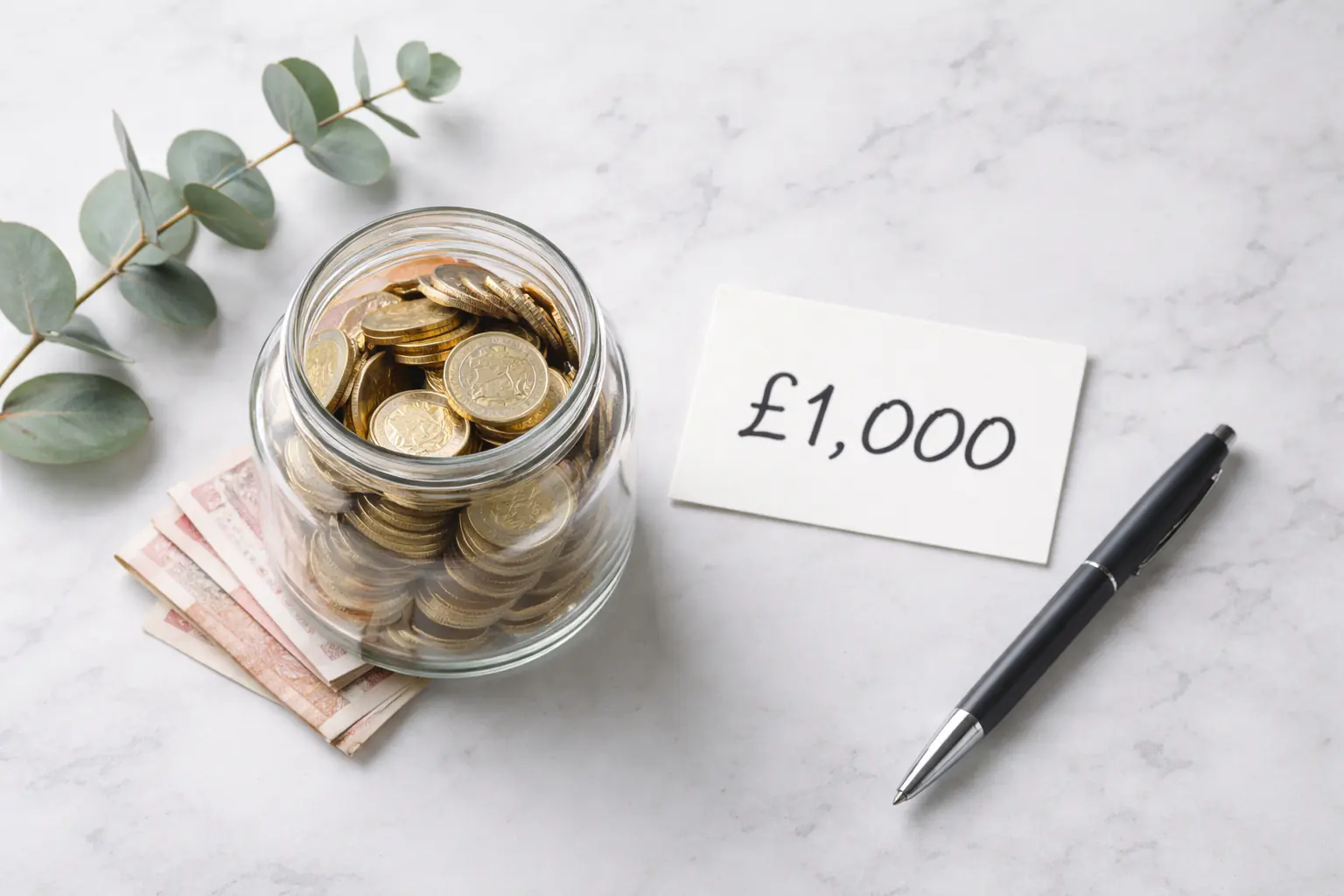
Whether you need an emergency cushion or a clean financial reset, here's the step-by-step way to reach £1,000 in savings faster than you think — without a dramatic lifestyle overhaul.
A thousand pounds sounds like a lot when you're starting from zero. But most people get there faster than they think — not through a dramatic lifestyle overhaul, but through a short, deliberate sprint using money you already have.
Key Takeaways
Saving £1,000 is achievable in 4–12 weeks for most people on an average UK income — the timeline depends on your starting point.
The fastest route combines cutting recurring costs, selling unused items, and adding a temporary income stream — not just spending less.
Your £1,000 should go into an easy-access savings account paying competitive interest — not a current account where it disappears invisibly.
Automating a daily or weekly transfer, even a small one, compounds into meaningful progress faster than you'd expect.
This is a sprint, not a marathon — the habits built during this push tend to stick with almost no extra effort.
At a Glance — Your Savings Timeline
Weekly Savings
Time to £1,000
£250/week
4 weeks
£125/week
8 weeks
£85/week
12 weeks
£50/week
20 weeks
Find your realistic weekly number and build a short-term plan around it. Most people can hit £100–£125/week combining the strategies below, even on a modest income.
The Right Mindset
This isn't about deprivation — it's about direction, for a defined four-to-twelve-week window. Short-term savings goals usually fail for one of three reasons: no dedicated account (so the money merges back into daily spending), no visible tracking (so the goal feels abstract), or trying to save purely by cutting while ignoring the faster lever of earning more. All three are fixable before you start — open a dedicated, named account today ("£1K Fund") before anything else. Named money with a visible balance behaves differently than money sitting in a current account.
Step 1 — Find the Money You Already Have
7 min read·September 2, 2026·1
Nadia Calloway
Writer
The fastest savings come from money already leaving your account without delivering value. Audit your subscriptions: the average UK household pays around £624/year on unused or barely-used subscriptions — streaming, gym memberships, software trials that auto-renewed. Cancel what you haven't used in 30 days. Renegotiate your bills: a ten-minute call to your broadband, mobile, or insurance provider — or an actual switch — routinely saves £40–£100/month; auto-renewal rates are almost always higher than new-customer deals. Make invisible spending visible: home coffee instead of bought, a packed lunch a few days a week, one fewer takeaway — small conscious swaps that add up to £100–£200/month without feeling like sacrifice.
Step 2 — Sell What You're Not Using
This is the fastest, least-disciplined lever available — a few hours of effort, no ongoing willpower required. Most people have £200–£800 sitting in clothes, electronics, and unused kit around their home if they look honestly. Vinted is the dominant platform for second-hand clothing in the UK, free to list. eBay suits electronics and branded items with real buyer demand (fees around 12.8%). Facebook Marketplace works well for bulky furniture with local, cash-in-hand collection. A weekend clear-out realistically nets £100–£500.
Step 3 — Add a Temporary Income Stream
Cutting gets you part of the way; earning more gets you there faster, and for a short-term goal, it doesn't need to be permanent. Freelance existing skills — writing, design, tutoring, admin — through Fiverr, PeoplePerHour, or Upwork; even one weekend project can add £100–£300. Gig economy shifts — Deliveroo, Uber Eats, or TaskRabbit — offer immediate, predictable income at roughly £10–£15/hour after expenses. Rent what you own: a spare room under the UK's Rent a Room Scheme earns up to £7,500/year tax-free, and a driveway or parking space via JustPark can add £50–£200/month.
Step 4 — Use a High-Interest Savings Account
A standard current account pays little to no interest. An easy-access savings account at a competitive rate currently pays around 4.5–5.0% AER — on £1,000, that's £45–£50 a year in genuinely free money for zero effort. The Personal Savings Allowance lets basic-rate taxpayers earn up to £1,000 in savings interest tax-free per year, which covers most people's savings entirely at current rates; a Cash ISA shelters interest from tax with no cap on the amount earned. Moving your £1,000 out of a 0% current account into a 4.7% one is worth roughly £47 a year — small alone, but it compounds.
If you want a structure, save a fixed amount daily for 30 days — £33/day gets you to roughly £990. Prefer a ramp instead of a flat rate? An escalating ladder (£1 on day 1, £2 on day 2, up to £30 on day 30) totals £465 — pair it with selling or freelancing to close the rest of the gap. The specific numbers matter less than turning an abstract goal into a daily scorecard.
📊 Track where your money's actually going: try our Emergency Fund Calculator to see exactly how much runway £1,000 buys you.
What the Numbers Tell Us
According to the UK's MoneyHelper service, roughly one in three UK adults has less than £1,000 in savings, and the FCA's Financial Lives survey found millions of UK adults hold no savings at all. Research on financial resilience consistently points to a small buffer — as little as £1,000 — as the threshold where short-term shocks like a car repair or a reduced-income month stop becoming crises and start becoming manageable inconveniences. This isn't about wealth. It's about stability.
Your Action Plan
Open a dedicated, named savings account today
Set up an automatic daily or weekly transfer — even £10/day counts
Cancel every subscription you haven't used in 30 days
List five sellable items on Vinted, eBay, or Facebook Marketplace this week
Make three calls: broadband, mobile, insurance — negotiate or switch
Pick one income lever (freelance, gig shift, or renting a space) and try it once
Once you hit £1,000, decide: is this your emergency fund, or is there a next goal?
Saving £1,000 fast isn't about being extreme — it's about being focused, for a short defined period, on redirecting money that's already available to you. Most people aren't short on income; they're short on direction. Stack subscription cuts, a decluttering weekend, and one income lever together for four to twelve weeks, put the money somewhere it can't accidentally be spent, and the goal is closer than it feels right now.
FAQ
Should I save £1,000 or pay off debt first?
High-interest debt — credit cards or overdrafts above 20% APR — should generally be cleared first. But a small buffer of £500–£1,000 before aggressively attacking debt prevents you from going straight back into debt when an unexpected cost lands. Many advisers recommend a mini emergency fund first, then debt.
Where should I keep my £1,000 once I have it?
In an easy-access savings account paying a competitive rate — not your current account. It needs to be reachable for genuine emergencies, but not so reachable that it disappears into daily spending.
What if I can only save £50 a week?
That's £200/month — five months to £1,000 at that pace alone. Slower than some routes here, but still real. Combine it with selling and one income lever and you'll get there sooner; consistency matters more than the amount.
This article is for informational and educational purposes only and does not constitute financial advice. Information accurate as of 2026. For personalised guidance, consider speaking with an FCA-authorised financial adviser.
Still with us?
Take the community poll, test yourself with the quiz — or both.
Topic hubs
Browse more articles in these categories and tags.
Nadia Calloway is a certified financial educator and personal finance writer who specialises in practical, human money guidance for everyday UK savers and investors. She writes for people who want clarity, not complexity.
125K followers89 articles
Related reading
Related articles
Closely related by shared tags and categories — continue in this topic cluster.